January 26, 2026
Board Games of the Viking Age
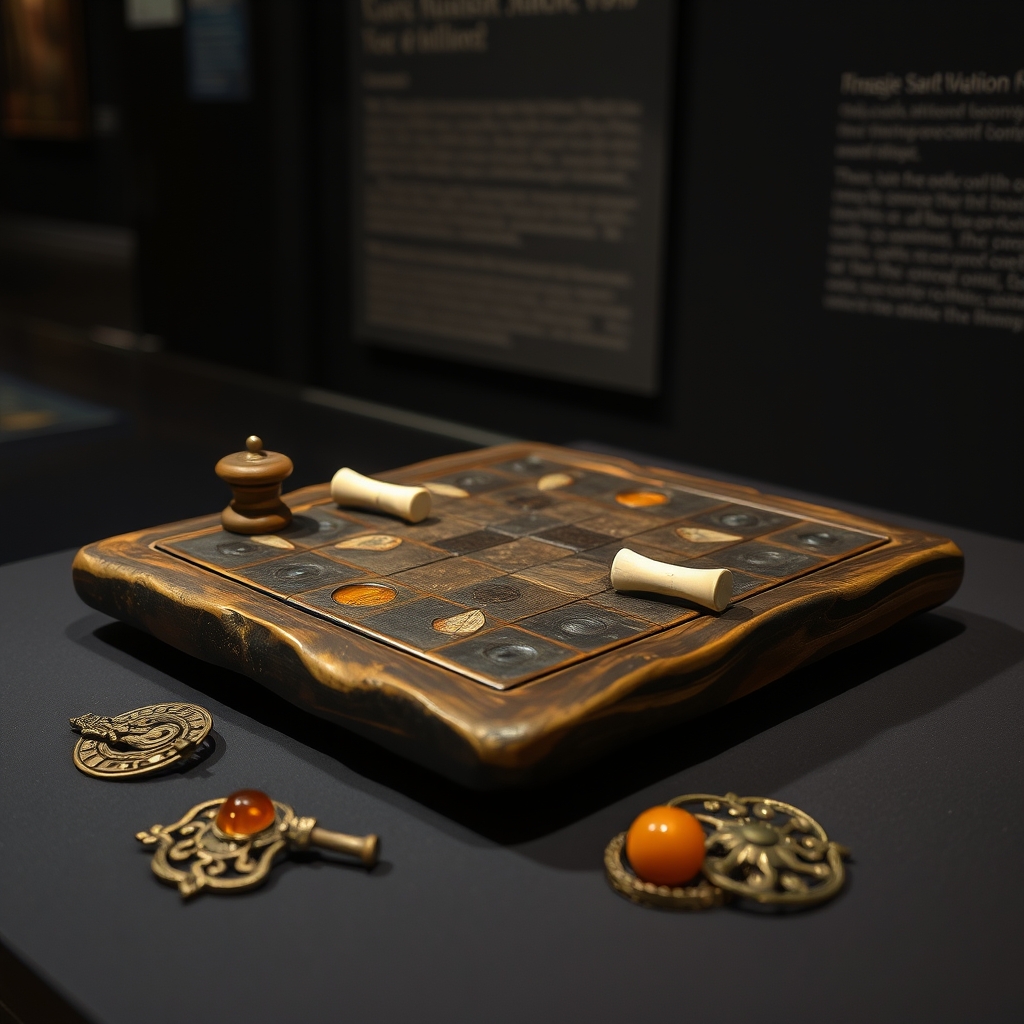
The Norse are remembered for longships, raids, and sagas, but the people of the Viking Age were also dedicated gamers. In the long darkness of northern winters, around hearths in timber halls, they played games of strategy and chance that have left traces in burial mounds, on carved runestones, and in the mythic poetry that describes the gods at play. To picture a Viking warrior is to picture, often enough, a game board near at hand.
The King’s Table by the fire
The signature game of the Norse world was Hnefatafl, whose name translates roughly as “King’s Table.” It belonged to a wider family of games known collectively as tafl, and it was unlike anything in the modern board game canon. It was asymmetric: one side commanded a king and a small band of defenders positioned at the center of the board, while the other side fielded a larger army of attackers ranged around the edges.
Archaeology shows how deeply the game was woven into Norse life. A board fragment from Vimose in Denmark predates 400 CE, and the Ockelbo runestone in Sweden, carved around 800 CE, depicts two men hunched over a tafl board. Where game sets turn up in Viking burials, they are frequently placed on or near the lap of the deceased, which suggests the dead were expected to keep playing, and keep ruling, in the world beyond. You can read more in our Hnefatafl history.
A game the gods played
Hnefatafl was more than a way to pass a cold evening. It carried cosmic weight. In the Vǫluspá, the Old Norse poem that tells of the creation and destruction of the world, the gods themselves are described playing tafl, the game standing as a symbol of cosmic order. When the world ends and is reborn, the poem imagines the surviving gods rediscovering their golden gaming pieces in the grass, a quiet image of order restored.
The game spread wherever the Norse traveled. Variants took root across the British Isles and Scandinavia: Brandubh in Ireland, Ard Rí in Scotland, Tawlbwrdd in Wales, Tablut among the Sámi of Lapland, and Hnefatafl proper in Iceland. They are essentially the same game wearing different names, a sign of how far Viking culture carried its favorite pastime.
Fox, geese, and the hunted king
Hnefatafl was not the only game on the firelit table. The Norse and their neighbors also enjoyed hunt games, in which uneven forces pursued one another across the board. Fox and Geese, still played today, belongs to this tradition: a single fox tries to break through or pick off a flock of geese that aims to corner and trap it. Such games of pursuit share an ancestry with both Hnefatafl and the older Roman game of capture, Ludus Latrunculorum.
The rise of chess in the eleventh century eventually swept many of these older games aside, and the rules of Hnefatafl had to be partly reconstructed from later sources. But the boards endured in the ground, waiting to be found. To set up a tafl game today is to do something that gods and warriors alike once did by firelight. Explore our Viking-era replicas and bring the King’s Table home.