May 4, 2026
Why Play Ancient Games in a Digital Age?
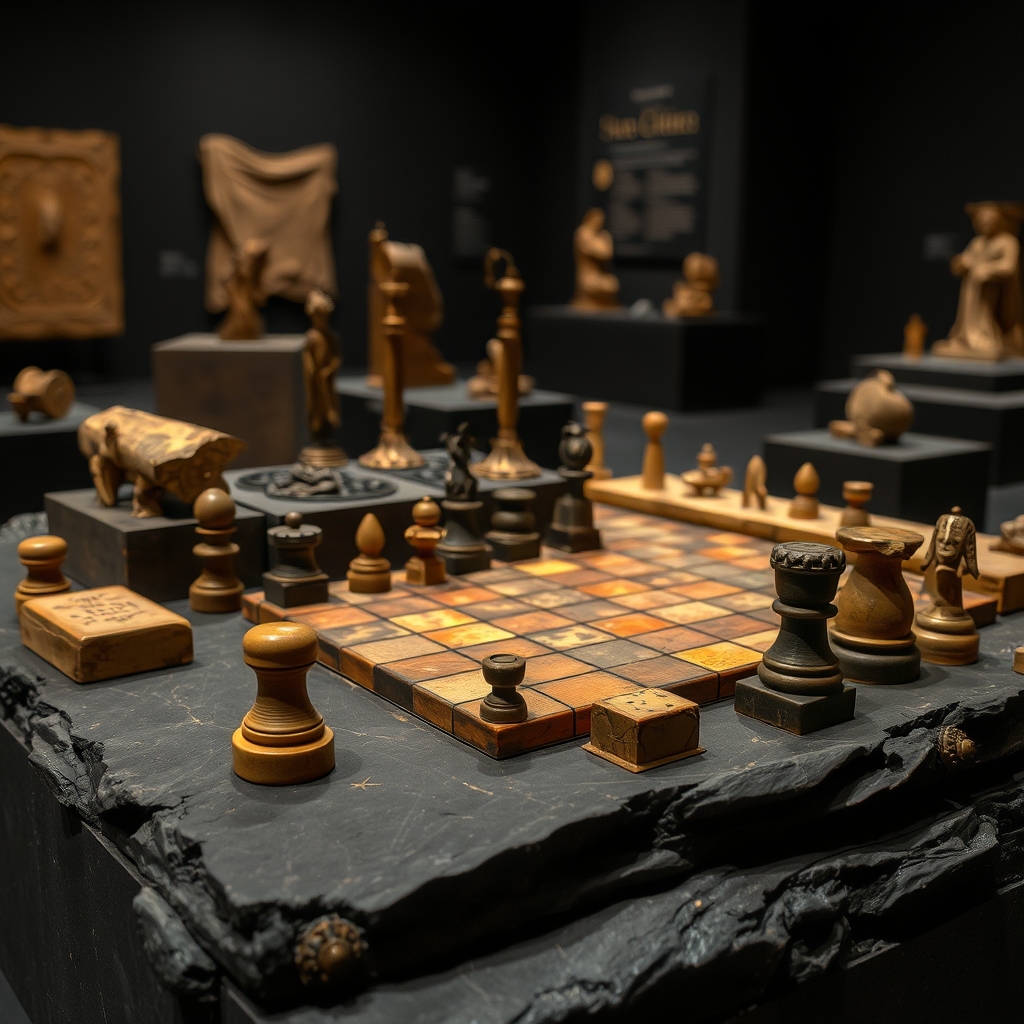
We are not short of games. A phone in a pocket holds more entertainment than a Roman emperor could command, instantly, endlessly, for nearly nothing. And yet people keep setting up boards that are thousands of years old, moving carved pieces by hand across a grid that someone first scratched into stone before the pyramids were finished. Why?
The weight of the thing
Part of the answer is physical. A digital game lives behind glass, summoned and dismissed with a fingertip, leaving no trace. An ancient game is an object. It has weight in the hand, a surface that catches the light, pieces that click when they land and that you arrange before play like a small ritual. When you reconstruct Mehen, the Egyptian serpent game, you are not tapping a screen; you are tracing a coiled snake that an Old Kingdom Egyptian believed mirrored the sun god’s nightly journey toward rebirth.
That physicality changes how the game feels. The pace slows. You look up from the board at the person across from you. There is no notification, no autosave, no algorithm tuning itself to keep you playing. There is only the position in front of you and the choice you must make. Games like the Roman Ludus Latrunculorum were designed for exactly this kind of unhurried, face-to-face attention, and they still deliver it.
A conversation across millennia
There is also the strange intimacy of doing what the dead did. When you play Fox & Geese, you are playing a game recorded in the household accounts of a fifteenth-century English king, the same hunt of the one against the many that occupied medieval evenings by the fire. The rules in your hands are, in some cases, reconstructions debated by scholars, which means each game is a small experiment in understanding the past.
This is not nostalgia. It is connection. A game that has survived four thousand years has survived because it works, because something in its structure kept drawing people back across the rise and fall of civilizations. To play it is to confirm, with your own hands and mind, that the people who built ziggurats and aqueducts laughed and schemed and lost gracelessly over the very same board. The screen offers novelty. The ancient board offers continuity.
What lasts has earned it
Digital games are extraordinary, and there is no need to choose sides. But it is worth noticing what the oldest games do that the newest cannot. They ask nothing of a battery. They demand a partner, not a server. They reward the kind of slow, embodied attention that has become rare and therefore precious. And they carry a history that no piece of software a year old could possibly possess.
A game that has been played for millennia is, in a real sense, a tested idea, polished smooth by countless hands. When you bring one back to your own table, you are not retreating from the modern world so much as keeping faith with a much older one.
If that appeals to you, browse our reconstructions and choose a game that has already outlasted empires. It will likely outlast your phone, too.