July 6, 2026
Strategy Tips for Ancient Race and Hunt Games
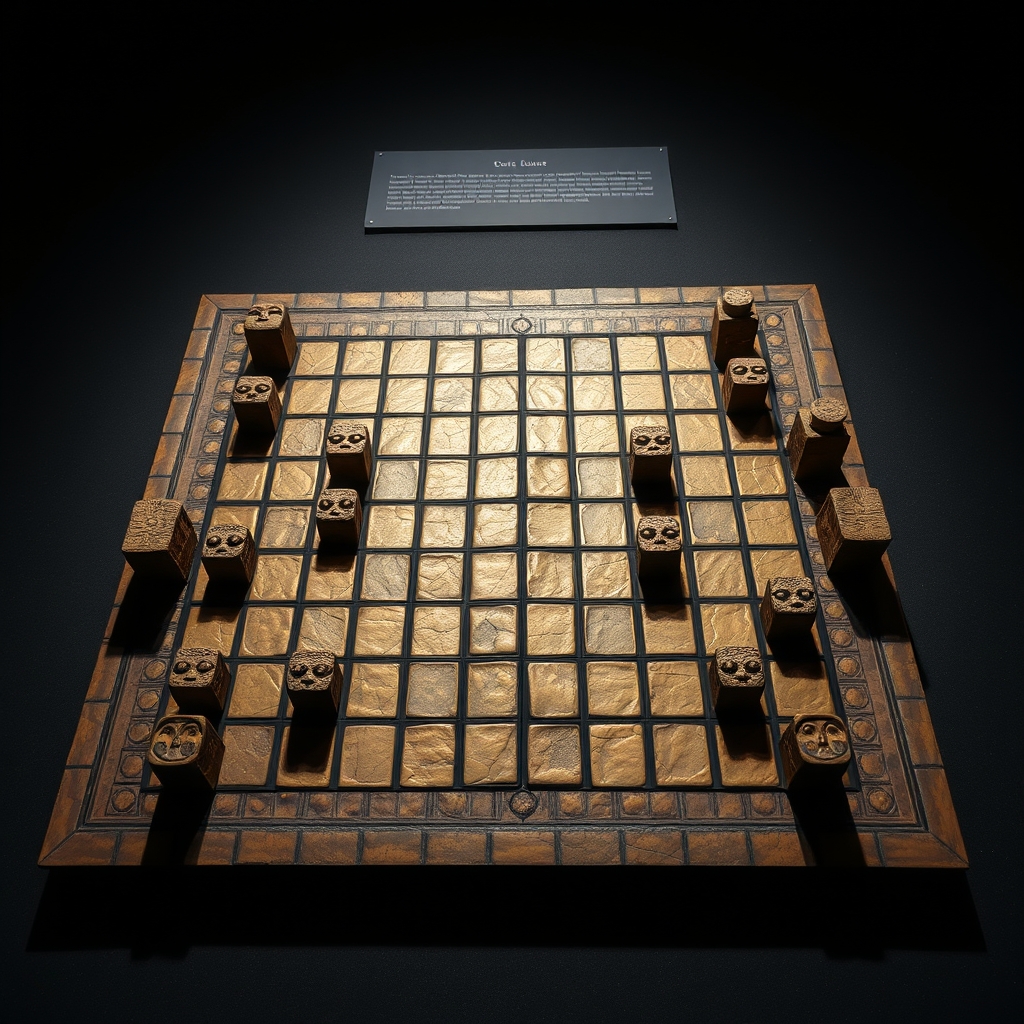
Ancient board games are often dismissed as games of pure luck: roll the dice, move the piece, hope. Play them seriously, though, and a different truth emerges. Beneath the throw of sticks or tetrahedral dice lies a structure of decisions, and the player who decides well wins far more than chance alone would predict. The tactics below carry across the two main families in our catalog: the race games like the Royal Game of Ur and Senet, and the hunt-and-capture games such as the Celtic and Roman war boards.
Tactics for the race games
In a race game, every die roll is a fork in the road, and the beginner’s error is to treat all moves of equal distance as equal. They are not.
- Fight for the safe squares. The Royal Game of Ur’s rosette squares protect a piece from capture and grant an extra roll. Holding one is worth more than raw progress; surrendering one to advance a single space is usually a mistake.
- Spread your risk early, concentrate it late. Opening with several pieces on the board gives you more options and makes you harder to block. As the game closes, the calculus reverses, so commit to getting your leaders home.
- Use blocking as a weapon. On Senet’s single thirty-square track, a piece sitting in the right spot can stall an opponent for several turns. Sometimes the strongest move is not to advance but to obstruct.
- Count before you commit. When a roll offers two legal moves, picture your opponent’s likely next throw. The move that looks shortest is often the one that leaves you exposed.
Tactics for the hunt and capture games
The war games, relatives of the Roman ludus latrunculorum and the Celtic fidchell, turn on surrounding the enemy rather than outrunning him. Different mind, different rules of thumb.
- Never advance a lone piece into the open. Capture in these games typically requires flanking a piece on two sides. A supported piece is safe; an isolated one is bait.
- Control the center, then the lines. Whoever commands the middle of the board dictates where the fight happens. Push outward from strength rather than scattering toward the edges.
- Bait and trap. Offer a piece that looks vulnerable, and punish the opponent who reaches for it by collapsing two of your own pieces around theirs.
The habit that wins games
Across every ancient game, one discipline matters most: think one full exchange ahead. The dice will do what they will, but you choose which piece moves and where the danger falls. Ancient players, who staked reputations and sometimes more on these boards, understood this in their bones.
Practice is the only real teacher. Pick a game, play it a dozen times against a worthy opponent, and watch your instincts sharpen. Find the board that suits your style at our games, and start building the kind of intuition the ancients prized.