June 29, 2026
Senet vs. The Royal Game of Ur: Where to Start
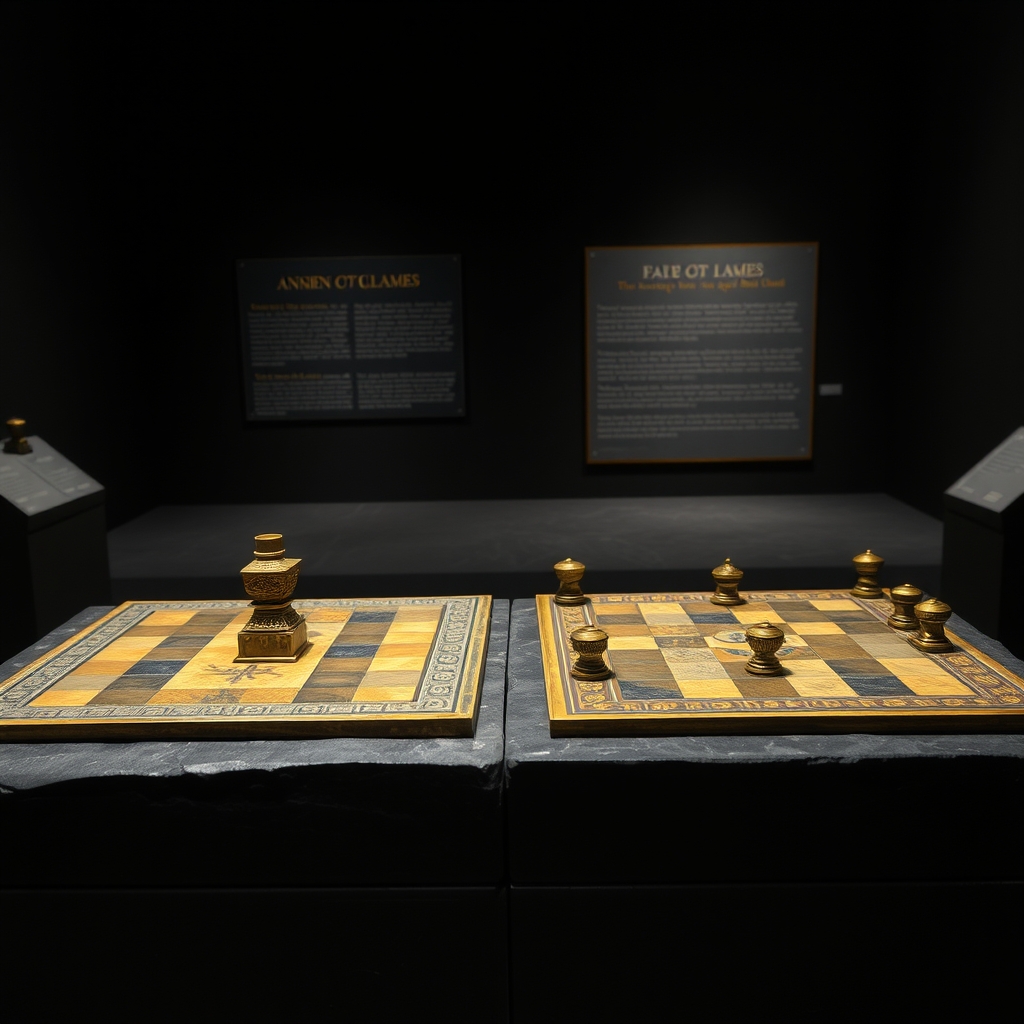
If you are buying your first ancient board game, two names rise above the rest: Senet from Egypt and the Royal Game of Ur from Mesopotamia. Both are among the oldest games humanity has ever played, both are race games for two, and both are alive and playable today. They are also, on closer inspection, quite different experiences. Here is how to choose.
Two boards, two worlds
Senet is the older of the two as a continuous tradition, played in Egypt from before 3100 BCE down into the Roman period, well over three thousand years of play. Its board is austere and elegant: thirty squares in three rows of ten, a single track that snakes back and forth. By the New Kingdom it had become bound up with the afterlife, its later squares marked with hazards and havens that mirror the soul’s passage through the underworld. Six Senet sets were buried with Tutankhamun for the journey ahead.
The Royal Game of Ur is the more luminous object. Drawn from boards excavated at the Royal Cemetery of Ur and dated to around 2600 to 2400 BCE, it is a compact, jewel-like surface of twelve and six squares joined by a bridge, originally inlaid with shell and lapis. Each player runs seven pieces along the track, racing to bear them off. It belongs to the “Twenty Squares” family that spread from Iran to Egypt.
How they play
Both are dice-driven race games, but the feel differs. The Royal Game of Ur uses four tetrahedral dice, counting the marked corners that land up, and rewards bold use of its protected “rosette” squares, where a piece is safe and earns an extra roll. It is punchy and tactical; a single good landing can swing the game. Senet moves by the throw of four marked sticks, and its long single track makes it more of a procession, a contest of timing, blocking, and the dread of those late hazard squares.
In short: the Royal Game of Ur is the sharper duel, full of capture and counter-capture. Senet is the more contemplative march, steeped in mythic atmosphere.
Which one belongs to you
Choose the Royal Game of Ur if you want the better-documented rules, faster decisions, and a game that crackles with tactical tension. Its reconstruction rests on an actual ancient text, so you can play knowing you are close to how Babylonians played.
Choose Senet if the romance of Egypt is what draws you, the idea of a game the dead were thought to play against the gods, on a board that decorated tomb walls and accompanied pharaohs into eternity. It is the more evocative object to hold.
Either way, you cannot start wrong; these are the foundations of the entire history of play. Compare them side by side, then add the other once the first has won you over. See both, and everything else, at our games.