January 19, 2026
Senet: The Egyptian Game of the Afterlife
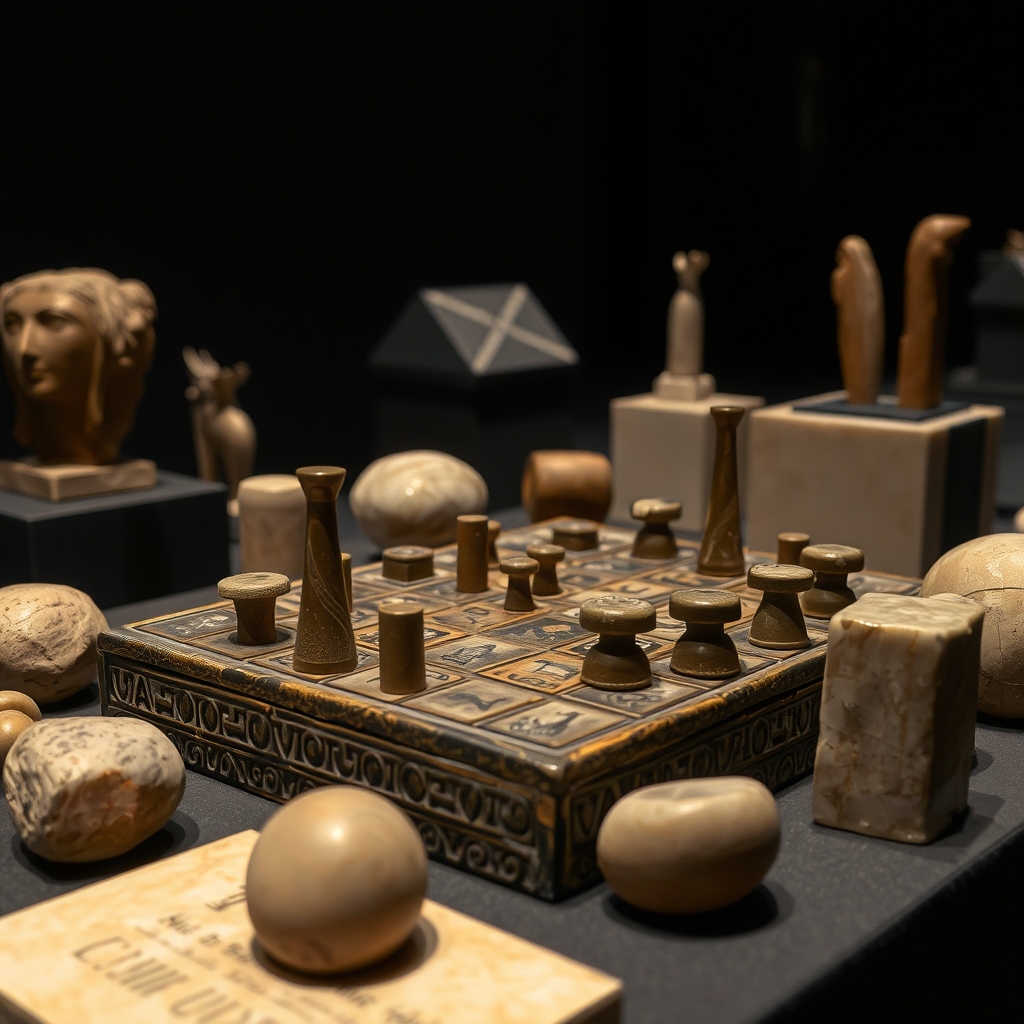
On a wall inside the tomb of Queen Nefertari, great royal wife of Ramesses II, a remarkable image survives. The queen sits alone before a board, her hand poised over a piece, an unseen opponent across from her. She is not passing an idle afternoon. She is playing for her soul. The game is Senet, and by the time of Nefertari it had become one of the most spiritually charged objects in Egyptian life.
From pastime to passage
Senet began, as far as we can tell, as a simple race. Its name means “passing,” and its earliest forms appear in Egypt around 3100 BCE. Two players moved their pieces across a grid of thirty squares, three rows of ten, advancing according to the throw of casting sticks. It was a game of luck and judgment, played by commoners and pharaohs alike, scratched onto temple roofs by bored workers and crafted in ebony and ivory for the wealthy.
But over the centuries, the Egyptians read deeper meaning into the board. The act of “passing” across the squares began to mirror the passage of the soul through the dangers of the Duat, the underworld. By the New Kingdom, between roughly 1550 and 1077 BCE, Senet had acquired a fully developed religious significance, becoming a symbolic representation of the journey of the ka toward eternal life.
The board as a map of the underworld
In its sacred form, the final squares of the Senet board were decorated with symbols marking the hazards a soul would encounter. Some squares carried good fortune; others meant peril, a fall back into danger, or a missed turn. To traverse the board successfully was to navigate the perils of the afterlife and emerge into union with the sun god Re.
This symbolism reached its fullest expression in funerary texts. Chapter 17 of the Book of the Dead depicts the deceased playing Senet against an invisible adversary, the outcome of the match standing in for the fate of the soul. To win was to pass safely into eternity. The living could play too, and in doing so rehearse the journey they would one day take, experiencing the netherworld passage without dying. You can read more in our Senet history.
Why Nefertari plays alone
This is why the painted queen sits alone. Her opponent is not another person but fate itself, or perhaps the gods who would judge her. The image was a kind of magical insurance, a declaration painted into the eternal architecture of her tomb that she would play the game of passage and win it. Senet boards and pieces were placed among grave goods for the same reason that food, jewelry, and furniture were: the deceased would need them in the life to come.
It is a striking thing, that a game of sticks and squares could carry the weight of eternity. Yet that is what makes Senet so compelling. It collapses the distance between the ordinary and the sacred, between an afternoon’s amusement and the journey of the soul. To move a piece across its board is to perform a gesture that ancient Egyptians believed echoed across the threshold of death.
If you would like to make that gesture yourself, our museum-quality Senet set lets you trace the same path that pharaohs and queens once played for their very souls. Explore the board and begin your own passage.