September 21, 2026
Royal Game of Ur Strategy: Mastering the Rosettes
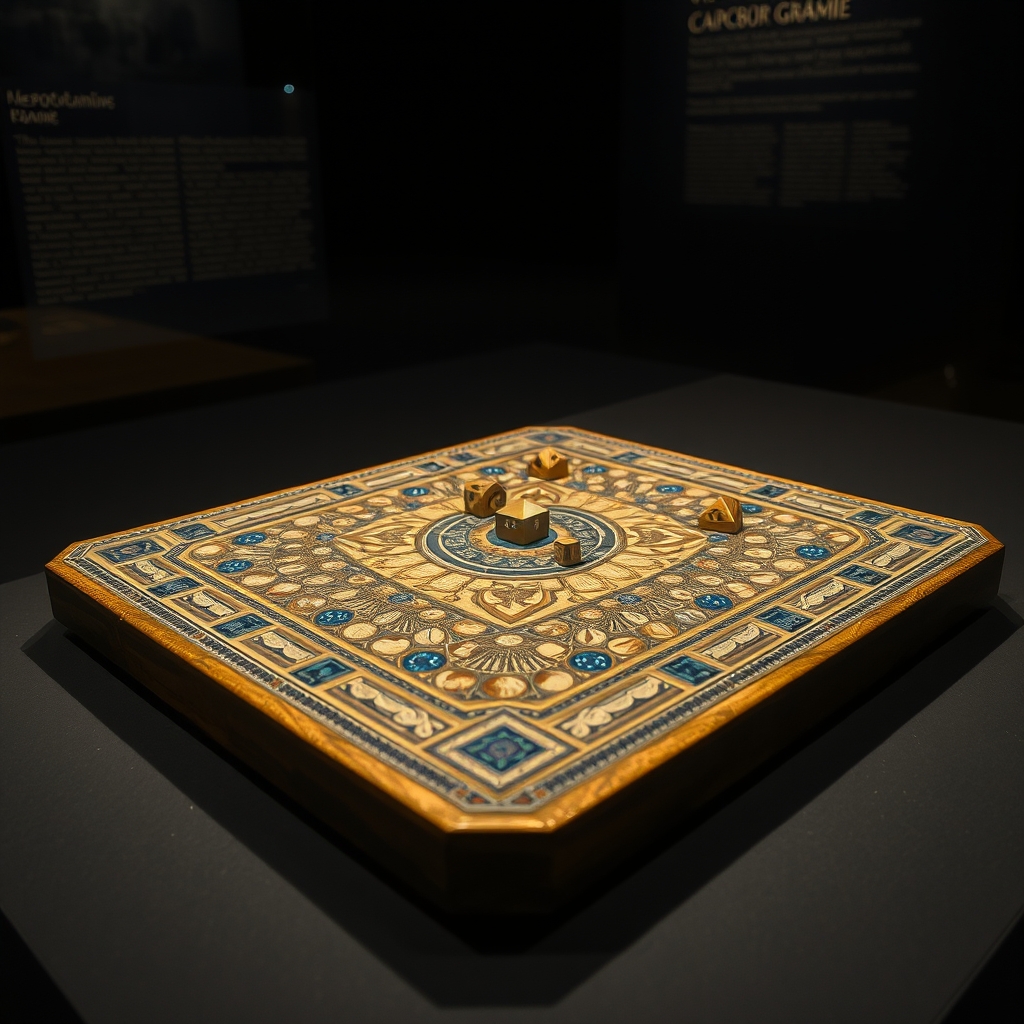
The Royal Game of Ur looks simple, and for the first few turns it plays simply: roll the four pyramidal dice, count the pips, race your seven pieces around the track and bear them off before your opponent does. But this is a race in which the leader does not always win, and the difference between a casual player and a sharp one comes down to a single feature of the board, the five rosette squares.
The rule of the rosette
The rosettes do two things, and both are powerful. First, landing exactly on a rosette grants an extra roll. Second, a piece resting on a rosette is safe and cannot be captured. Everywhere else on the board, an opponent who lands precisely on your piece sends it back to the start, costing you every step it had gained. The rosettes are therefore the islands of safety in a shared and dangerous central lane.
The temptation for beginners is to treat the dice as pure luck and simply move whatever piece travels farthest. That instinct loses games. The four binary dice produce a sharply weighted spread of results, since totals of one, two, and three are far more common than zero or four, so you can often read, before you throw, which moves are likely and plan to drop onto a rosette rather than overshoot it. Each rosette you hit is a free turn, and a chain of free turns can let one player move several times while the other sits idle.
The contested middle
The track is shaped so that each player runs along a private outer column, then merges into a shared central column, then peels off again to a private finish. That shared middle is where the game is decided. While your pieces are on your own side they are untouchable; the moment they enter the common lane they are exposed.
Two principles follow. First, prize the central rosette. The safe square in the middle of the shared lane is the most valuable real estate on the board: it shelters your piece in the danger zone and hands you a bonus roll in the bargain. Sitting a piece there can also block an opponent who needs that exact square. Second, time your entries. Do not pour all seven pieces into the contested lane at once; feed them in so that a capture costs you a single piece, not your whole advance. A captured piece is not merely delayed. It is sent home to begin the long journey again, which is why a well-placed capture can swing the entire game.
Bearing off and the endgame
A piece exits only on an exact roll, so the final stretch rewards patience over greed. Late in the game, keep pieces spread across several distances from the exit rather than bunched together; that way some legal bearing-off move is almost always available, and you waste fewer throws. If you must choose between racing a leading piece home and capturing an opponent in the middle, the capture is frequently the stronger play, since denying your rival twenty squares of progress is often worth more than gaining four of your own.
Mastery of Ur, in the end, is a matter of converting the rosettes into tempo: every safe square and bonus roll you claim is a turn your opponent does not get, and games are won by the player who simply gets to act more often.
Ready to test these lines for yourself? Explore our museum-grade reconstruction of the Royal Game of Ur and find out whether the rosettes favor you.