August 24, 2026
How to Win at Hnefatafl: A Strategy Guide
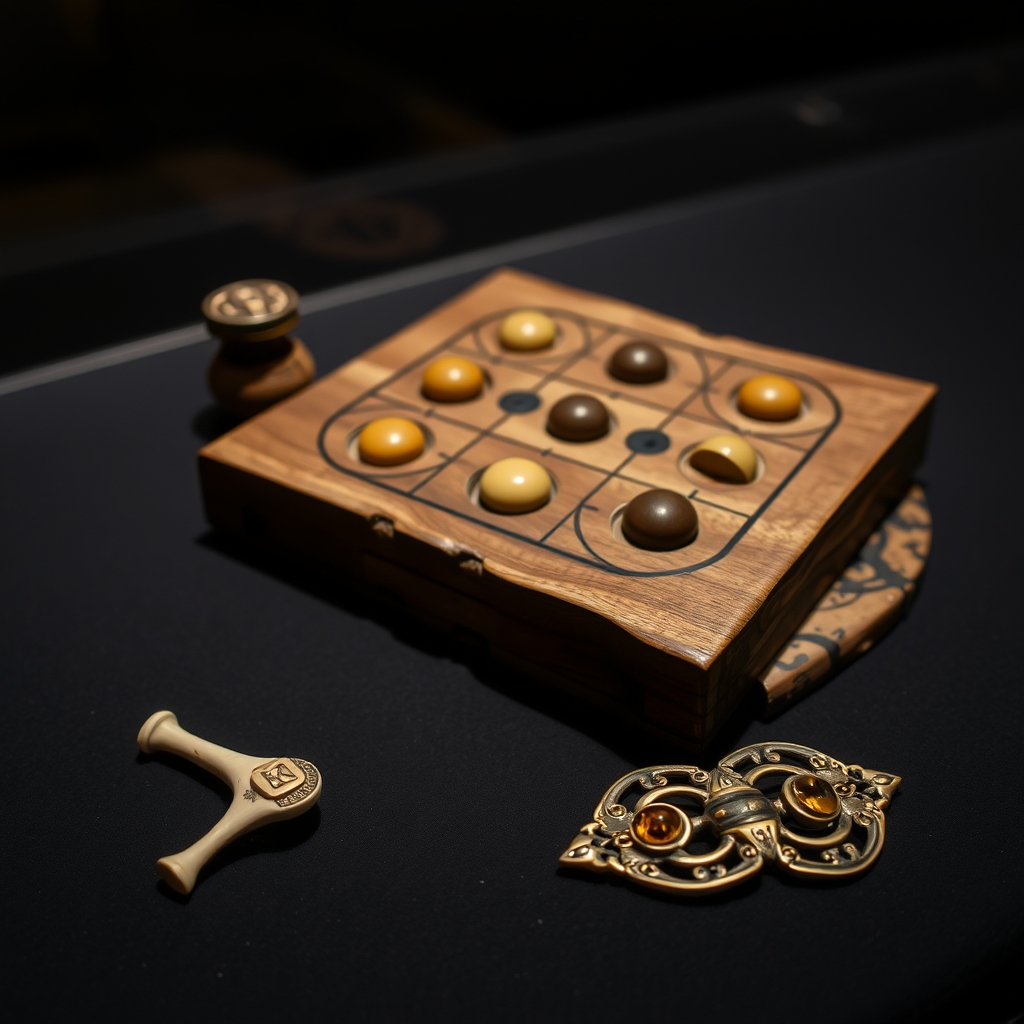
Hnefatafl is one of the great asymmetric games of the ancient world, and its asymmetry is the whole point. One player commands a king and twelve defenders. The other commands twenty-four attackers, exactly twice as many. The defenders are outnumbered but start in the center, while the attackers ring the board’s edges. To win, the king must reach one of the four corner squares. To win, the attackers must surround the king on all four sides before he escapes. Two players, two completely different problems. Before you read further, our how to play Hnefatafl guide covers the full rules.
Playing the king’s defenders
The defender’s task looks simpler than it is. You hold the smaller force, but you hold the center, and the king only needs one open road to a corner. Your enemy’s plan is to take that road away. From the opening moves, the attackers will work to restrict your access to the edges of the board, fencing you into the middle where the king has nowhere to run.
Your counter is to fight for the periphery, and above all for the squares that connect the king’s position to it. Think of yourself as opening lanes rather than capturing pieces. Remember that all pieces move like a rook in chess, any distance along a row or column, so the king can break for a corner the instant a clear file opens. Use your defenders to control the routes, not to trade blows in the center. Patience favors you: every turn the attackers spend tightening the net is a turn they are not closing it completely, and a single oversight gives the king his escape.
Commanding the attacking army
As the attacker, your numerical advantage is real but slow. You cannot simply charge the king, because you will lose pieces to capture, sandwiched between defenders, and the king will slip past you. Your strategy is the blockade. You must build a complete ring around the defenders, then close it methodically, shrinking the space turn by turn until the king has no path to any corner.
The discipline is in the closing. Move too fast and you leave gaps. Move recklessly and your own pieces get captured between a defender and a restricted square. Once the blockade holds, tighten it carefully and use forced moves to your advantage, maneuvering so that the defenders must expose a piece to capture or surrender ground. Capture is your tool for prying the ring shut, not an end in itself.
The shape of a good game
The reason Hnefatafl endured for centuries across the Viking world is that this tension never resolves cleanly. A skilled defender can wriggle free of an almost-complete blockade, and a patient attacker can grind down a careless king. Neither side is obviously favored, and good players relish switching roles to feel both pressures.
The most useful lesson is positional, not aggressive: control the lines that matter, and let captures follow from position rather than chasing them. Whether you are escorting a king to freedom or drawing a noose around him, the board rewards foresight over force.
Ready to test these tactics on a board the Norse would recognize? Explore our museum-quality reproduction Hnefatafl set and take command of the king, or the army sent to bring him down.