May 11, 2026
How Ancient Games Teach Real History
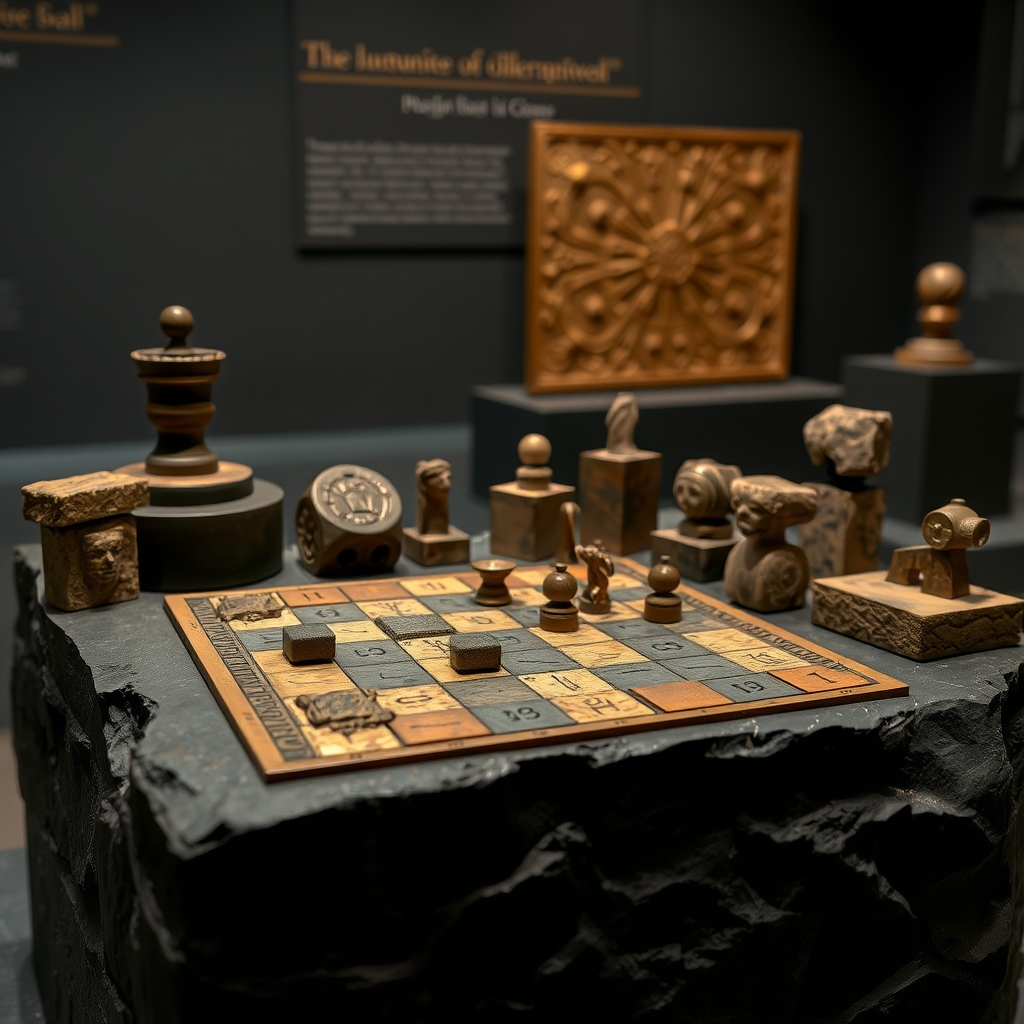
You can read that the ancient Egyptians believed in a perilous journey through the underworld, and you will likely forget the detail within a week. Or you can play Mehen, racing your pieces along a coiled serpent toward the center, and learn in your body that the Egyptians imagined the path to rebirth as a spiral guarded by a protective snake. The second kind of knowledge tends to stay. This is the quiet superpower of ancient games: they teach history by making you live a small piece of it.
History you do, not history you read
A textbook hands you conclusions. A game hands you a situation and lets you discover why people acted as they did. When you sit down to the Roman Ludus Latrunculorum, you are not memorizing that Romans prized strategic thinking; you are doing it, surrounding an enemy stone on two sides while protecting your own line from the same fate. The Roman writers who praised the game as a school for the mind were not exaggerating. Play it for an afternoon and their metaphors about generalship and foresight stop being abstract.
The same is true of social history. Fox & Geese appears in the household accounts of King Edward IV of England in the 1460s, rendered in silver-gilt, and it was also scratched onto cheap boards for ordinary players. To learn the game is to step into a pastime that crossed every layer of medieval society, and to feel the strange logic of a contest where one player is powerful and few while the other is weak and many.
The museum comes off the shelf
Institutions like the British Museum understand this well. Its most celebrated game, the Royal Game of Ur, sat silent in a case for decades after Leonard Woolley excavated it from a Mesopotamian royal tomb in the 1920s. Then the curator Irving Finkel deciphered a Babylonian clay tablet that recorded the rules, and a four-and-a-half-thousand-year-old game could be played again. Suddenly the artifact was not just something to look at but something to do, and that is why replicas of these games now travel into classrooms and living rooms.
Ancient games are dense with the texture of their cultures. Senet, scratched into the dust by Egyptian children or rendered in fine wood for the wealthy, shows how a single game could belong to everyone. Knucklebones and throwsticks reveal how the ancients handled chance before the dice cube existed. Each piece of equipment is a primary source you can hold and use.
Why it sticks
Learning research has long recognized that we remember what we do far better than what we are told, and that emotion fixes memory in place. An ancient game delivers both. You make decisions, you feel the sting of a bad move, you celebrate a clever encirclement, and along the way the historical facts attach themselves to those moments. The date a game was first mentioned, the deity its board honored, the empire it crossed: these stop being trivia and become the backdrop to an experience you actually had.
That is the case for play as a form of study. It is also simply more enjoyable than a worksheet, which means people return to it, and return is where real learning lives.
If you teach, or simply want to learn the old way, bring one of these reconstructions to your table and let the history teach itself through your hands.