July 27, 2026
How 3D Printing Is Reviving Ancient Games
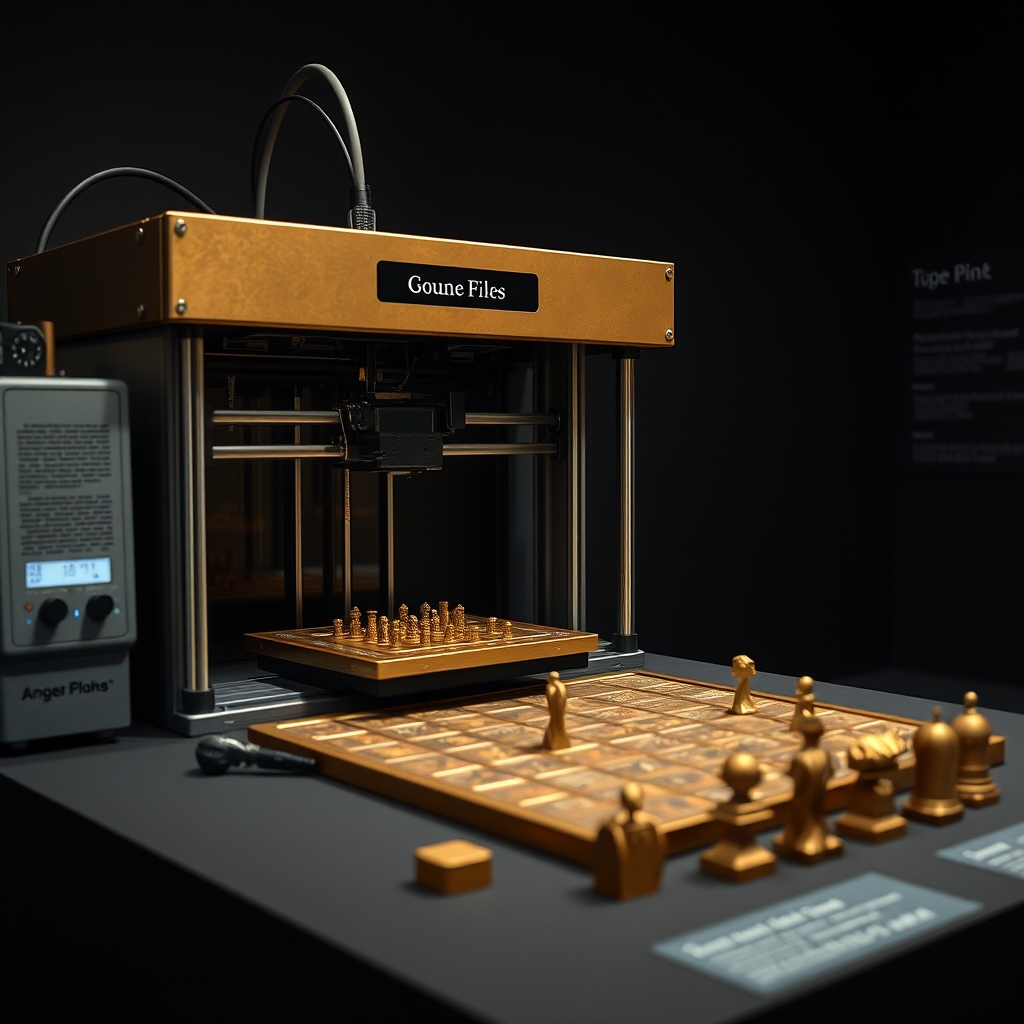
Most of humanity’s oldest games survive only as fragments. A broken stone grid reused as flooring behind a Roman bathhouse. A single inlaid board sealed in a tomb. A scatter of gaming counters in a museum drawer, separated forever from the board they once moved across. For centuries, these objects could be studied but not truly played. They were too rare, too fragile, too precious to put a piece down on. Additive manufacturing is quietly changing that.
From fragment to playable object
The work begins with the archaeology, not the printer. A faithful reproduction depends on the surviving evidence: excavation photographs, museum measurements, published drawings, and in the best cases a 3D scan of the original artifact. From these sources a digital model is built, the dimensions checked against the record, the proportions of squares and the depth of carved cells reconstructed.
Only then does printing enter the picture. Layer by layer, a board that has existed for three thousand years as a museum case object becomes something with weight and texture again, something you can set on a table and use. Where an original is incomplete, the gaps are filled the way a conservator works: from comparison with intact examples of the same game, never from invention. The goal is reconstruction, not fantasy.
Why it matters for rare games
Some ancient games are well attested. Others survive in only a handful of examples worldwide. The Royal Game of Ur is known from boards scattered across the Near East and the Mediterranean, but most people will never stand in front of one. A Roman Latrunculorum board carved into a fort floor cannot be borrowed for an evening’s play.
This is where the technology earns its place. A digital model can be reproduced indefinitely without touching the original, and without the cost or risk of traditional carving. A game that existed in one museum vitrine can now exist on a thousand kitchen tables. The artifact stays safe, and the game comes back to life.
Honoring the original
There is a discipline to doing this well. It would be easy to smooth away the irregularities, to make everything cleaner and more symmetrical than the ancients managed. We resist that. The character of a hand-cut board, the slight asymmetries, and the way a Hnefatafl grid sits on its frame are part of what makes the object honest. Material choice matters too: the finish should evoke bone, wood, or stone, not the glossy plastic of a toy.
The reward is a strange and pleasing collapse of time. The board you unpack is, in every measurable dimension, the board an Egyptian scribe or a Viking trader once owned. The rules our how to play Hnefatafl guide describes are the same rules played beside a longship fire.
We think of our work as a small act of resurrection: not bringing the games back from the dead so much as letting them be alive again, in your hands. Browse the full collection and find a game that has been waiting a very long time to be played.