May 25, 2026
Games Along the Silk Road
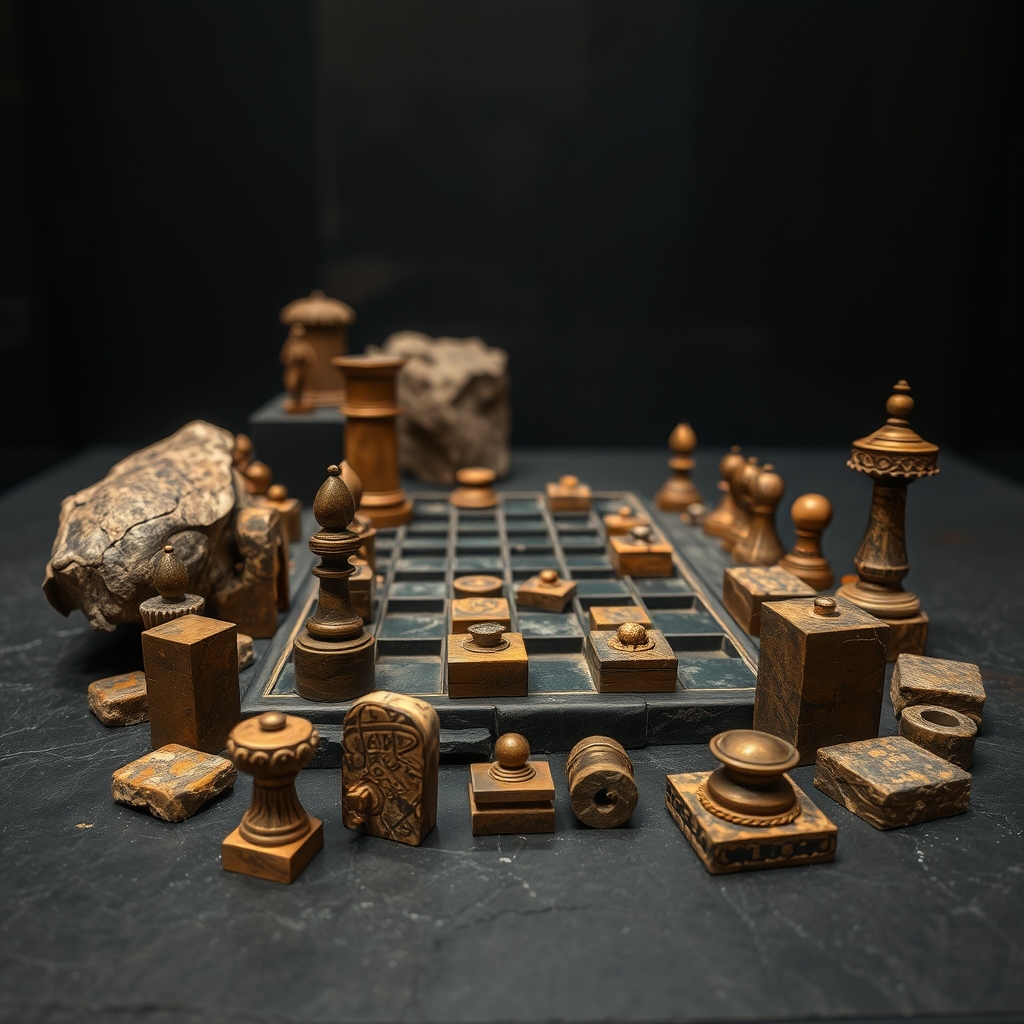
The Silk Road carried silk, spices, glass, and gold across the breadth of Asia. It also carried something lighter and more durable than any of them: games. A board needs no warehouse and a set of rules weighs nothing, so wherever merchants, soldiers, and pilgrims paused to rest along the route, they played, and what they played they left behind. Tracing the spread of board games across these routes is one of the clearest maps we have of how cultures touched and changed one another.
Chess: one game, many empires
No game tells the story better than chess. It began in the Indian subcontinent around the fourth century CE as chaturanga, a game whose four arms of the army, infantry, cavalry, elephants, and chariots, mirrored a real battlefield. From India it traveled the trade routes in two directions. Eastward it reached China and was reshaped by local taste. Westward it entered Sassanid Persia, where it became shatranj, and from there it spread through the Islamic world after the Arab conquest of Persia in the seventh century, eventually arriving in medieval Europe to become the game we know.
A Persian text, the Chatrang-namak or Book of Chess, even dramatizes the exchange. In it, an Indian king sends chaturanga to the Persian court as a challenge, and the Persians not only solve it but answer with a game of their own invention. That answering game was Nard.
Nard and the race games of the East
Nard, the Persian ancestor of backgammon, emerged in Sassanid Persia around the third to sixth centuries CE, a race game in which the roll of dice carried pieces around a track. Like chess, it refused to stay put. It flowed outward along the same Silk Road networks, reaching India and traveling east into China, where a version called shuanglu was played, and onward still to the imperial courts of Japan. At each stop the game kept its skeleton and changed its skin, adapting to new players, new boards, and new names.
This pattern, a stable core wrapped in local variation, is the signature of a game that travels. The race game seems to answer something universal in players, which is perhaps why versions appear across the ancient world, from the Mesopotamian Royal Game of Ur to Egyptian Senet, long before the Silk Road linked them into a single conversation.
What the routes reveal
The journeys of these games are not merely charming footnotes. They are evidence of contact, of the moments when a Persian merchant and a Chinese host sat across a board and found common ground in its rules. A game that crosses a frontier proves that ideas crossed it too. The transformations along the way, chaturanga hardening into shatranj, Nard becoming shuanglu, record exactly how each culture reinterpreted what it received.
That same restless travel shaped the games of the Mediterranean. The Roman Ludus Latrunculorum descended from earlier Greek strategy games, and the hunt of Fox & Geese belongs to a northern European tradition that spread across the continent by similar means. Games have always been among the most portable of human inventions, slipping across borders that armies could not hold.
If you would like to hold a piece of that long migration in your own hands, explore our reconstructions and follow a game back along the road it traveled.